Maintaining a strong backlink profile is crucial for a solid SEO performance. Many websites are struggling to rank, not due to poor content, but because of a bad link and signals of poor quality that undermine trust. This is the reason why the spam score checker is an important tool for web owners as well as SEO professionals.
A spam score can help you determine if your website is a risky source of backlinks or has suspicious signals that could affect the search engine rankings. If left unchecked, the issues could reduce visibility and undermine credibility.
If you can learn to identify and correct problems with spam early, you can safeguard your rank and create lasting SEO success. In this article, you’ll learn about how spam scores function and why they are important, and how you can improve your site’s ranking with proven strategies that work with the latest SEO standards.
What Is Website Spam Score?
A website’s spam score reputation is the risk percentage that a domain faces, dependent on the quality of its backlinks as well as trust indicators. It assists SEO experts in determining if the site appears reliable or is suspicious to search engine crawlers.The majority of SEO experts check spam score online prior to constructing backlinks or launching link-building campaigns. This helps avoid penalties and ensures that only safe domains are utilized for SEO tasks.
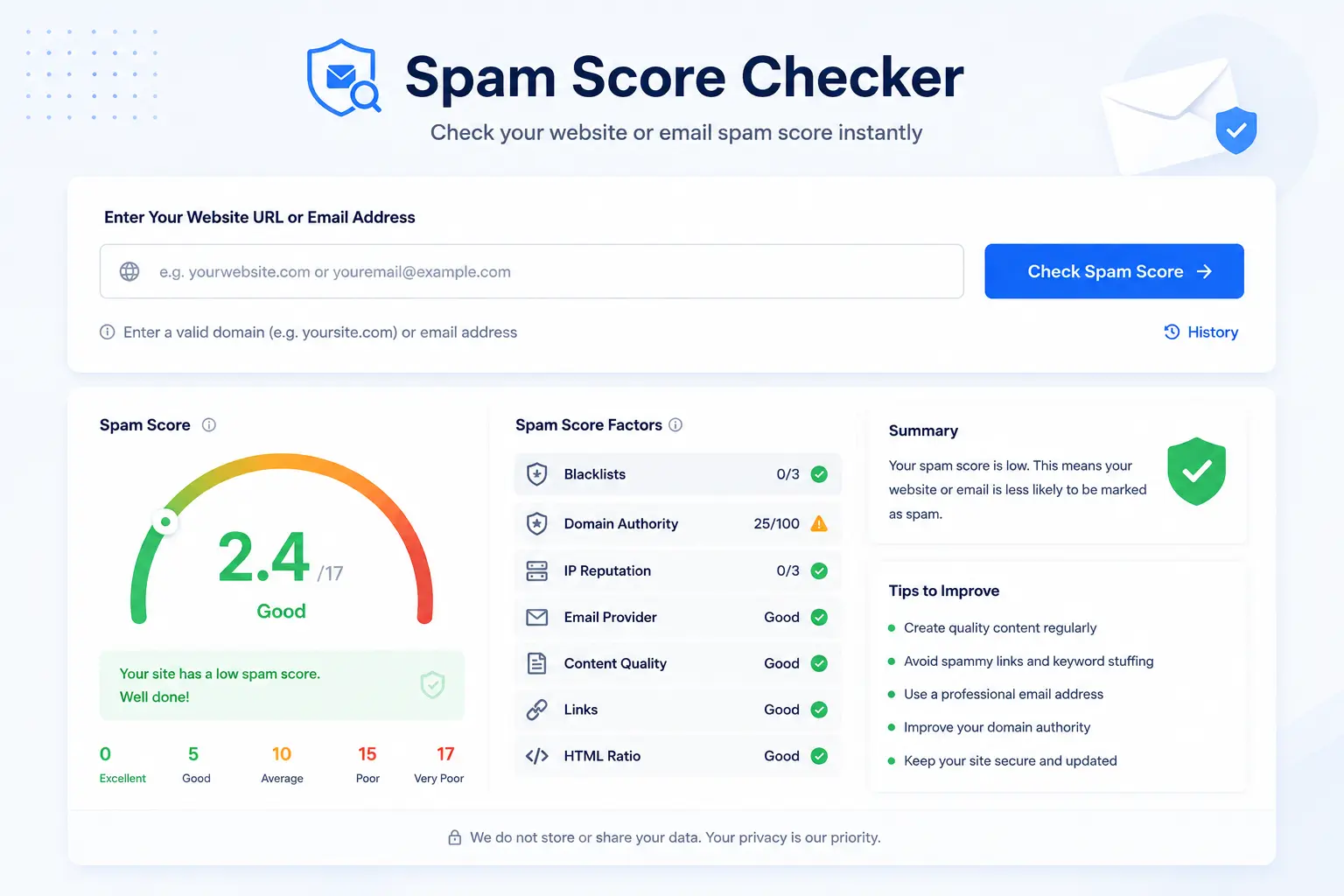
Tools that act as a checker for domain spam score checker a variety of signals, including the quality of links, the reputation of domains, and linking patterns. These tools detect harmful backlinks and offer insight into how your website appears to search engines.
History Of Spam Score Tools
- In 2015, Moz has launched Moz launched the Spam Score Metric.
- 2016-2017 Spam signals were upgraded.
- 2019-2023 Backlink analysis accuracy and reliability were improved.
- 2024 – Present Spam detection algorithms were more sophisticated.
Why Checking Spam Score Matters for SEO
Spam monitoring plays a crucial role in maintaining steady rankings. Websites with a high number of spam signals are often unable to get noticed, even though their content is well-written. Using a free spam score checker lets beginners and professionals to check their domain’s health and quality without huge amounts of money. Regular monitoring helps to spot patterns and help maintain high-quality links.
Another key aspect is figuring out the backlinks’ spam score. Backlinks that are harmful from unrelated or suspicious domains can undermine trust signals and diminish the potential for ranking. By monitoring these backlinks, you can take prompt action to safeguard the SEO performance.
How Spam Score Is Calculated?
Scores for spam are calculated by analyzing several signals that suggest the risk of unnatural or dangerous behaviour. SEO tools utilize sophisticated algorithms to scan web pages and study domain patterns.
A reputable spam score analysis tool examines anchor text authenticity, diversity of the domain, and content-related signals. This information can help site owners determine the cause of the issues associated with spamIf you want to check your website’s Spam score with the software, it will evaluate various factors, including
- Many low-quality backlinks
- Domain Relevance
- Link Diversity
- Anchor text and anchor text usage
- The overall domain’s credibility
.
Best Tools to Check Spam Score Accurately
The use of reliable tools can improve the accuracy of analysis and also helps to maintain trust in your domain. SEO professionals favor tools that offer both authority and spam data.A reputable SEO spam score checker provides precise information about harmful hyperlinks and patterns that are suspicious. These reports can help SEO experts to plan ways to remove and recover links efficiently.
Many professionals depend on this spam score checker tool offered by trusted platforms to evaluate the risks of linking and to identify weak spots in the performance of domains. A popular option can be The Moz Spam Score Checker. It is which is known for its thorough report and robust software for detecting spam.
Alongside an analysis of spam, using a website authority checker can help determine trust signals that impact the overall performance of a website’s ranking. Certain advanced platforms can also add the domain authority and spam score in conjunction, giving a comprehensive picture of the health of a domain.
How to Use a Spam Score Checker Step-by-Step
Utilizing a spam score checker properly will ensure accuracy and more accurate SEO-related choices. Follow this easy process:
Step 1: Enter Your Website URL
Choose the tool you prefer and copy and paste the domain’s name into the text input box.
Step 2: Start the Scan
Conduct the analysis and allow the program to analyze your backlinks as well as domain signals.
Step 3: Review Spam Report
Review flagged backlinks and look for suspicious domains within the search results.
Step 4: Remove Toxic Links
Contact webmasters, or employ disavow tools in order to get rid of negative backlinks.
Step 5: Monitor Regularly
Repetition of analysis every month to ensure good health of the domain and to prevent any future threats.
How to Reduce Spam Score Effectively
Reduced spam scores require constant monitoring and appropriate link management. Websites that adhere to ethical SEO methods perform better over time.
Here are the proven techniques
Remove Toxic Backlinks
Find harmful links by conducting regular audits, and eliminate untrustworthy backlinks right away. Links that are toxic are among the main reasons for rising spam messages.
Build High-Quality Backlinks
Concentrate on getting backlinks from relevant websites within your area of expertise. Good backlinks build the authority of your site and lower the risk.
Improve Content Quality
Content with high value attracts natural links and increases domain credibility.
Maintain Technical SEO
Fix broken links, improve the internal link, and boost site speed to keep the trust signal.
These steps help to maintain stable rankings and enhance the long-term SEO growth.
Common Mistakes That Increase Spam Score
Many websites are unaware of the fact that they increase the risk of spam through ineffective SEO methods. Making sure to avoid these errors improves efficiency and avoids penalties.
Buying Low-Quality Links
Cheap backlink packages typically contain domains that are spammy and can harm trust.
Using Automated Link Tools
Automation can create patterns of linking that are not natural, which increase the number of spam messages.
Ignoring Link Monitoring
The inability to regularly review backlinks can lead to spam issues that are not visible.
Publishing Thin Content
Content of low value undermines authority and reduces credibility.
Making sure to avoid these mistakes increases trust in the domain and boosts its rankings potential.
Why Trust Matters?
Google’s recent updates highlight trust authority, authority, and user value. Websites that show trust are more successful in search results. Maintaining clean backlinks helps establish credibility and enhances the reliability of your website. Utilizing advanced analysis techniques helps detect harmful signals earlier.
Search engines recognize websites that are
- Create helpful content
- Create natural backlinks
- Maintain domain credibility
- Be sure to follow ethical SEO practices. Follow ethical SEO
Final Words
The monitoring of the health of domains is vital to maintain solid SEO performance. Websites with good quality content and clean backlinks have better credibility and a solid ranking. With trustworthy tools, analyzing backlinks and enhancing the quality of content, owners of websites can shield their domains from penalties and ranking loss.
Regularly monitoring and responsible SEO practices will ensure the long-term development and visibility in results. If you have the right approach and constant optimization, your website will gain credibility and ongoing success in search engine rankings.
FAQs
What Is a Good Spam Score?
A score that is less than 30% can be considered to be safe for the vast majority of websites. Scores higher than this require the attention of a professional and cleanup.
How Often Should You Check Spam Score?
An annual analysis is recommended for active websites that have regular backlinks.
Can Spam Score Affect SEO Rankings?
Yes, spam signals that are high lower trust and negatively impact the ranking performance.
Which Tool Is Best for Spam Checking?
Professional tools that analyze backlinks and authority tracking offer the most accurate results.