
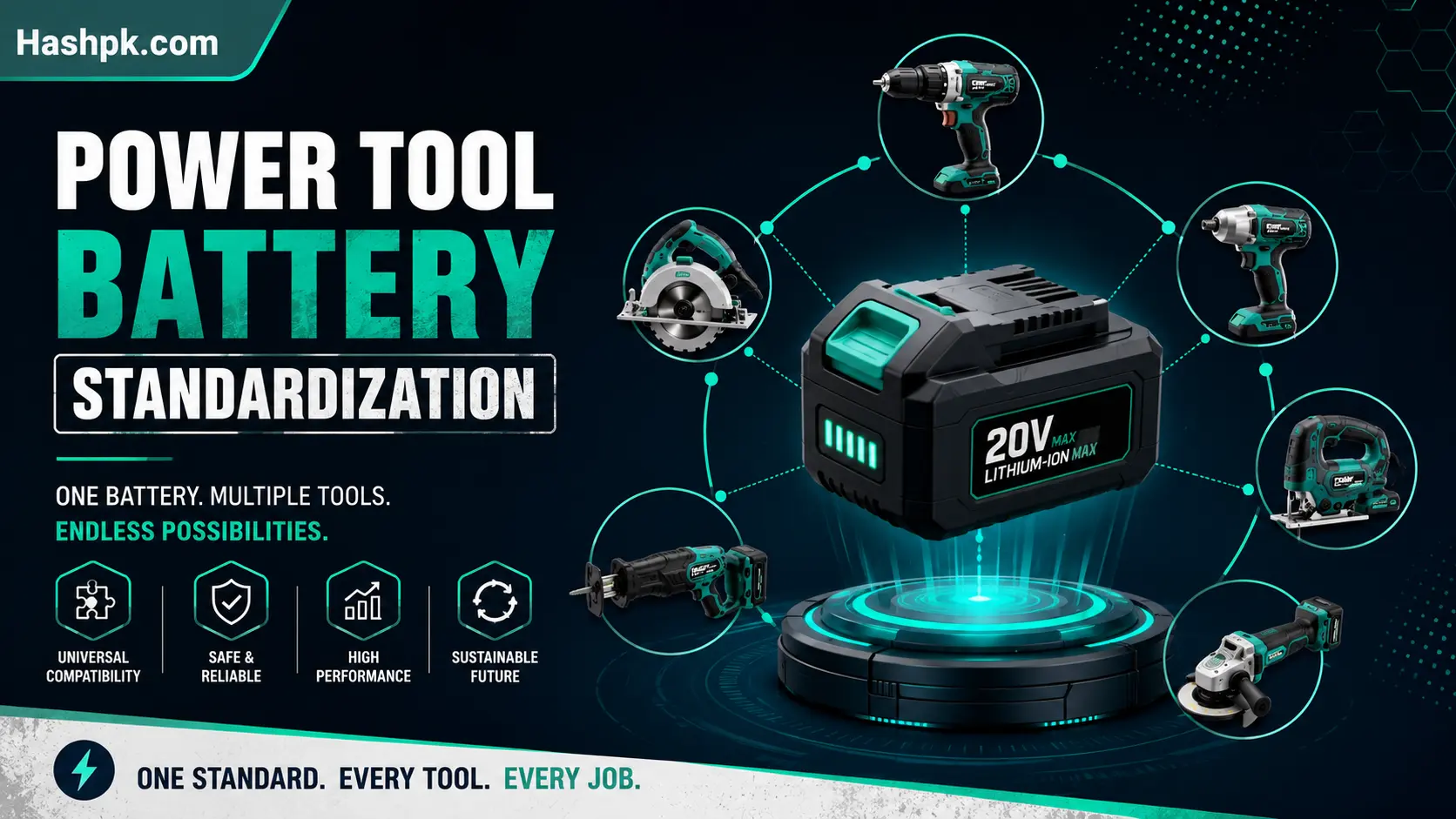
Go dig through any contractor’s van and you’ll find one. A small pile of dead batteries in the door pocket or under the seat, none of which fit anything currently in the toolbox. Somebody switched brands, or upgraded a saw, and now there’s a $130 battery sitting there doing absolutely nothing. That pile is basically proof that power tool battery standardization still hasn’t been solved — even if 2026 has gotten us noticeably closer than we were five years ago.
I’m not going to give you the vague, brochure version of this topic. Below is what standardization actually looks like today, which alliances are real versus marketing fluff, what this stuff actually costs, and fourteen things worth doing whether you’re building a cordless kit from zero or trying to salvage the batteries already sitting in your garage.
Who This Actually Hits Hardest
It’s not just contractors. Your neighbor who bought a cheap drill five years ago and a hedge trimmer from a different brand last spring is dealing with the exact same mess, just on a smaller scale. Every mismatched battery either sits in a drawer forever or ends up in the trash somewhere it shouldn’t. Tens of millions of power tool batteries get tossed out every year in the US alone — and a good chunk of that is batteries that still worked fine, just not with anything the owner had left.
That’s the actual cost here. Not just wasted money, but a slow pile-up of packs nobody can use.
What “Standardization” Really Means
Simply put: one battery, multiple tools. Sometimes that’s within a single brand. Sometimes — the harder version — it’s across brands entirely. Think USB-C finally replacing that drawer of mismatched phone cables everyone used to have.
Within-brand standardization has been around for years; most companies already let one voltage line power drills, saws, and blowers under the same badge. Cross-brand is the part everyone actually wants and the part that’s taken forever to happen.
Why We’re Not There Yet
It’s not a technical wall. It’s math. Replacement batteries make manufacturers more money, margin-wise, than the tools do. A closed system keeps you buying from one brand for a decade. Add in the fact that battery management systems are genuinely valuable engineering — nobody wants to hand that to a competitor for free — and you get the fragmented market we’re stuck with.
The Alliances Worth Actually Paying Attention To
Instead of one universal battery, the industry split into a few real alliances that solve this within smaller circles of brands.
| Alliance | Backed By | Roughly How Many Brands | Who It’s For |
| CAS (Cordless Alliance System) | Metabo | 45+ | Trade specialists who need niche tools on one battery |
| AmpShare | Bosch Professional | Dozens of specialty brands | Contractors already running mostly Bosch |
| Power for All Alliance | Bosch Green, Husqvarna, Gardena | Consumer/garden brands | Homeowners and yard-tool users |
| Proprietary + adapters | Milwaukee, DeWalt, Makita | N/A | Anyone locked in who needs a workaround |
Honestly, if you’re starting fresh, checking alliance membership matters more than checking the logo on the box.
14 Tips That Actually Help

1. Look Up Alliance Membership Before Buying Tool #1
Three or four batteries into one system, switching gets painful and expensive. Do the five-minute search before you commit, not after.
2. Buy Bare Tools Once You’ve Got a Platform
Skip the battery-and-charger bundle if you already own compatible packs. Bare tools usually run $70 to $150 cheaper than the full kit, and that gap widens on the bigger, high-capacity platforms. Every alliance brand sells bare-tool versions for exactly this reason.
3. Don’t Treat Adapters Like a Real Fix
Yes, there are adapters that’ll let a DeWalt battery bolt onto a Milwaukee tool. They work by going around the manufacturer’s safety design, not through it. Fine for an old, out-of-warranty tool you don’t care about. Not something I’d build a whole toolkit around.
4. Never, Ever Charge Through a Cross-Brand Adapter
This one’s not negotiable. Charging one brand’s battery on another brand’s charger through an adapter is a legitimate fire risk, not just a “voids your warranty” situation. Charge on the original charger. Every time.
5. Know Where the Protection Circuit Actually Lives
Something most people never think about: some brands build over-discharge protection into the battery itself; others put it in the tool. Mix brands through an adapter and that protection can just… not be there. Drain a lithium cell too far and it’s often dead for good.
6. The 40–80 Rule Isn’t Just a Nice-to-Have
Lithium-ion cells age hardest at the extremes. Store your batteries somewhere between 40% and 80% charge instead of always leaving them at full or letting them sit empty, and you’ll genuinely stretch their lifespan by years, not months.
7. Don’t Get Tripped Up by Voltage Marketing
“20V Max” and “18V nominal” are usually describing the exact same platform — 20V is just the peak startup number, not what the tool actually runs at day to day. Don’t write off cross-brand compatibility just because the numbers on the box look different.
8. Watt-Hours Beat Voltage for Comparing Packs
Two batteries can share a voltage rating and still run completely differently on the job because real capacity comes down to watt-hours, not volts. Look at that number directly instead of guessing from volts or amp-hours alone.
9. Rotate Batteries Instead of Hoarding Them
No power on-site? Two or three batteries on rotation, kept topped up through a portable power source, usually beats owning ten packs that mostly just sit there going stale.
10. Check for a Digital Battery Passport
Newer professional packs are starting to include a scannable code showing material origin, manufacturing footprint, and current battery health. Worth checking for if you’re buying used, or buying something you plan to keep for years.
11. GaN Chargers Solve a Problem You Didn’t Know You Had
Gallium nitride chargers are smaller and run noticeably cooler than the old bricks. Cooler charging is gentler on the cells, and it also frees up outlet space if you’re juggling more than one battery system on the bench.
12. Cycle Life Matters More Than Sticker Price
A $90 battery that’s dead in a year isn’t actually the cheaper option compared to a $150 pack that lasts three. Do that math per year of ownership, not per purchase.
13. Adapting Will Cost You the Warranty — Plan Around That
Non-OEM batteries and cross-brand adapters will almost always void a manufacturer’s warranty. Save the adapter tricks for tools that are already out of warranty, not the drill you bought last week.
14. Recheck the Alliance Map Every Year
Alliances add brands, and sometimes shift terms, on a rolling basis. A company that was fully proprietary last year might be in CAS or AmpShare now. Worth a quick check before assuming nothing’s changed.
Bonus: Read the Fine Print on “Universal Fit” Claims
Some third-party batteries advertise broad compatibility that quietly only applies to certain tool model years or firmware versions. Check the actual model list, not just the brand name, before trusting a “fits everything” label. This is probably the single most common way people end up with a battery that clicks in but won’t actually run the tool right.
Who Should Actually Own This Decision
For a solo DIYer, this is a one-time choice — pick a platform, stick with it. For a contracting business running several crews, it’s worth writing down as an actual policy: one or two approved alliances, one charger standard across every truck, and a clear rule on when adapters are allowed and when they’re not. Skip that, and within two years the shop ends up with five incompatible battery systems because everyone bought whatever was on sale that week.
Where the Mistakes Usually Happen
| Mistake | Why It Backfires | What Works Better |
| Buying tools brand-by-brand with no real plan | Ends up with several small, incompatible battery sets | Pick one platform or alliance first, then buy inside it |
| Treating adapters as permanent | Voided warranty, and cell damage building up over time | Adapters for old, out-of-warranty tools only |
| Storing batteries at 100% all the time | Accelerates capacity loss | Store closer to the 40–80% range |
| Ignoring watt-hour ratings entirely | Comparing packs that aren’t actually equivalent | Check watt-hours, not just voltage or amp-hours |
| Buying way more batteries “just in case” | Wastes money and creates more e-waste | Rotate a smaller set with faster charging |
What This Actually Costs, in Real Numbers
Vague “it saves money” claims don’t mean much. Here’s what it actually looks like:
| Scenario | Typical Cost | Notes |
| New tool with battery + charger bundled | $150–$300 | You’re paying for a battery even if you own three already |
| Same tool sold bare (no battery) | $70–$150 less than the bundle | Only makes sense if your existing pack fits |
| Cross-brand adapter | $15–$40 | Cheap upfront, but voids the warranty and adds resistance |
| Replacement OEM battery pack | $100–$180 | Often close to 40% of what the original tool cost |
| Alliance-compatible pack from a different member brand | Roughly the same as OEM | No adapter markup, no warranty risk |
Bare tools inside a platform you already own are almost always the cheapest way forward. Adapters are cheap but risky. An alliance-compatible battery gets you bare-tool pricing without the adapter’s downsides — that’s really the whole appeal of the alliance model in one sentence.
Where This Is Actually Headed
Don’t expect one universal battery to show up and fix everything overnight. What’s realistic: more focus on watt-hours instead of voltage marketing, wider adoption of digital passports for tracking a battery’s health and origin, and continued growth of CAS and AmpShare as more niche brands decide joining beats staying proprietary.
Frequently Asked Questions
Is there a single universal power tool battery yet? No. What exists is alliance-based standardization — groups of brands sharing one platform — not one battery working across every manufacturer on earth.
Are cross-brand adapters actually safe long-term? They can work fine for a while, but they route around some of the safety engineering built into a matched battery-and-tool pair. Good as a bridge, not something to build a permanent setup around.
Does a bigger voltage number mean a stronger tool? Not necessarily. That number is often peak startup voltage, not sustained output. Watt-hours tell you a lot more about real capacity.
Will proprietary batteries ever fully go away? Probably not soon. They’re too profitable for manufacturers to abandon, so expect proprietary and alliance systems to keep coexisting rather than one replacing the other.
What’s the quickest way to cut down on battery waste? Stick to one alliance where you can, and keep existing packs alive longer with proper 40–80% storage instead of replacing them the moment performance dips a little.
Does joining an alliance cost the buyer anything extra? No. As a buyer, “joining” just means you’re purchasing tools and batteries from brands that already belong to that alliance. There’s no fee — the compatibility is baked into the hardware itself.
Final Thought
Full, brand-agnostic power tool battery standardization probably isn’t coming anytime soon, and it might never fully arrive given how profitable proprietary systems are for manufacturers. What has changed is how many real shortcuts now exist — alliances, better chargers, smarter storage habits — that get a toolbox a lot closer to “one battery, many tools” without waiting for the whole industry to agree on one global standard.
Check alliance membership before your next purchase, pay attention to watt-hours instead of voltage marketing, and treat adapters as a bridge rather than a home. Do that consistently and this stops being a fight — it just becomes maintenance.


