
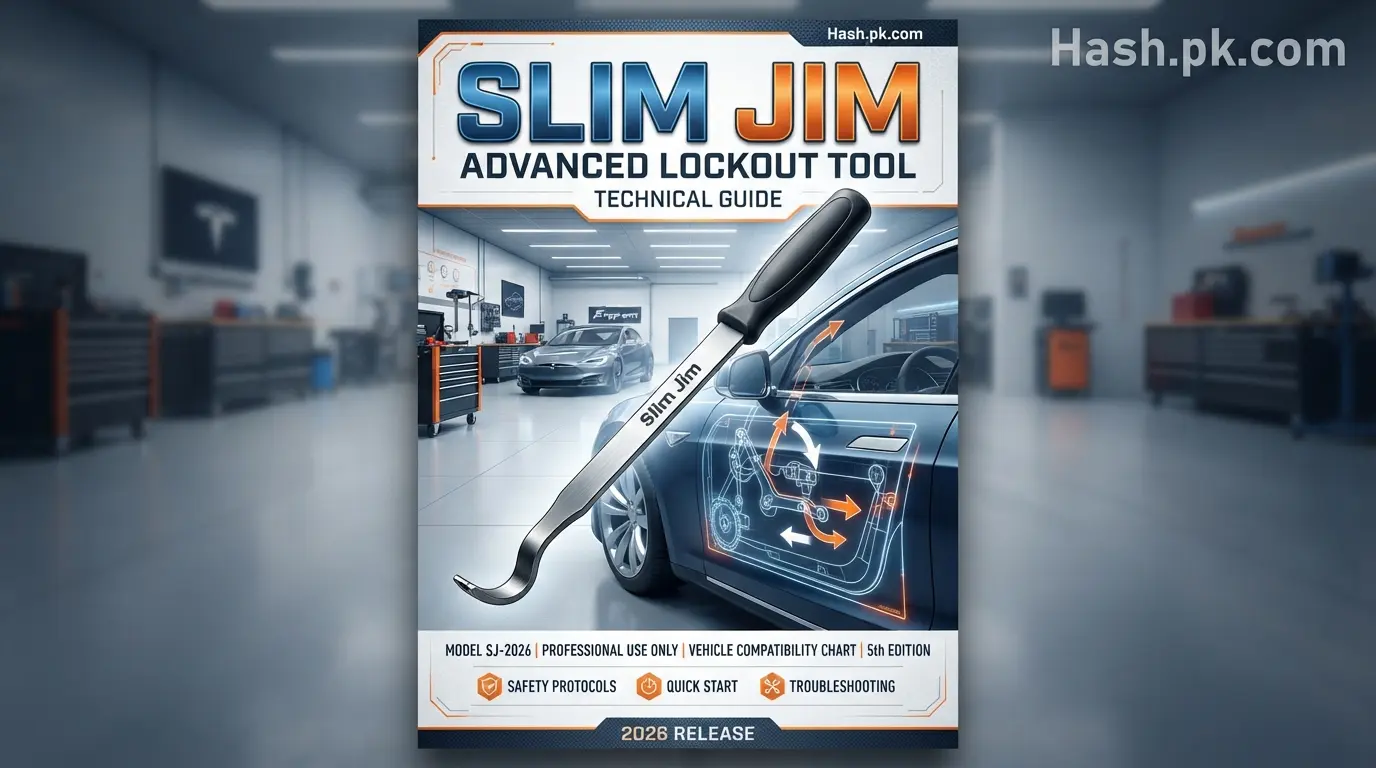
Locking your keys inside your car is one of those small disasters that always happens at the worst time — you’re already late, it’s raining, and there’s your key sitting on the driver’s seat mocking you through the glass. For decades, the go-to fix has been the slim jim tool, a thin metal strip that slides down inside the door to trip the lock from within. But cars have changed a lot since this trick became common knowledge, and in 2026 the honest answer to “will this even work on my car?” is genuinely: it depends on what you drive.
Most of what’s written about this tool online hasn’t been touched in years, which is a problem because door hardware changes almost every model generation. This guide reflects where things actually stand right now — which cars it still helps with, which ones it won’t touch no matter how good your technique is, and what people are reaching for instead when the classic method just isn’t an option anymore.
What Is a Slim Jim, and How Does It Actually Work?
A slim jim is a flat strip of spring steel, roughly two feet long, with a hooked or notched tip. You slip it between the outer door skin and the window glass, past the rubber weather stripping, and feel around until the hook catches one of the metal rods connected to the lock. A careful pull on that rod trips the mechanism and pops the door open. It’s a purely mechanical trick — no electronics involved — which explains both why the slim jim tool worked so reliably on older cars and why it’s become such a gamble on newer ones. The name itself dates back to a specific manufacturer’s product line decades ago, but it’s since become the catch-all term for any long, flat door-opening strip regardless of who actually made it.
Why Newer Cars Are Harder to Open This Way
Pop the door panel off almost any car built in the last ten years and you’ll find a lot more crammed inside than there used to be — side airbags, wiring looms, sound-deadening foam, sometimes anti-theft shielding bolted right where the old lock rod used to sit exposed. Even when a hook can physically squeeze past all that, plenty of automakers have swapped the metal rod for a plastic cable or a fully electronic actuator, and there’s simply nothing left for a slim jim to grab. This is also why a lot of locksmiths have quietly stopped reaching for one first: a hook that nicks a wiring harness or brushes an airbag sensor can turn a five-dollar lockout into a five-figure repair, and nobody wants that liability sitting on their shoulders.
It’s not just airbags either. Manufacturers have also added rubber and foam buffers along the window channel specifically to make it harder to slide anything down that gap in the first place — a small design tweak aimed squarely at reducing car theft, which had the side effect of making legitimate lockout tools much less useful too. So the same redesign that keeps thieves out also keeps you out when you’ve genuinely locked yourself out.
Does It Still Work on Cars in 2026?
Realistically, yes, but only for a shrinking slice of vehicles — older American sedans and trucks with basic power locks, cars where the door cavity hasn’t been redesigned, anything where that rod is still sitting right where it’s always been. It’s a much worse bet on side-impact-airbag-equipped vehicles, fully electronic locking systems, and newer EVs that increasingly skip physical backup entirely in favor of phone-as-key or app-based unlocking (Hyundai, Genesis, and BMW all lean on this now).
A growing number of insurance policies and manufacturer apps now cover lockouts automatically, which means fewer people even need a physical tool in the first place — it’s worth checking whether your coverage already includes this before spending money on one. If you’re not sure which camp your car falls into, look up your exact make, model, and year before you try anything, guessing wrong risks a dent, a snapped rod, or a very unwelcome airbag deployment.
How to Use a Slim Jim Tool
- Find the small gap near the top corner of the window, usually on the driver’s side.
- Use a thin plastic wedge to widen that gap slightly — never force it, glass cracks easier than people expect.
- Slide the hooked end down slowly, staying tight against the window track rather than diving deep into the panel.
- Feel for resistance. That’s a rod. Wiggle gently side to side instead of jamming forward.
- Once you’ve hooked something, lift or pull with steady pressure — no yanking.
- If nothing’s happened after a couple of minutes, stop. You’re either in the wrong spot or the car simply isn’t built for this method.
Common Mistakes That Cause Damage
Most of the damage people cause isn’t from using the tool itself — it’s from rushing. Forcing the wedge too hard cracks window seals, jamming the hook straight down instead of feeling for the rod bends interior linkage that’s expensive to replace, and continuing to dig around after five minutes of no luck almost always means the tool is in the wrong spot rather than one push away from success. Patience, oddly enough, is the main skill here.
Slim Jim vs. Other Lockout Options
Buying any single tool only makes sense if it actually matches how your car locks. Before spending money, it’s worth seeing how the classic hook stacks up against everything else people reach for during a lockout — some options are cheaper, some are far safer for the car, and one or two only make sense if you’re doing this often enough to justify owning proper gear.
| Tool | Works Best On | Skill Needed | Damage Risk | Typical Cost |
| Slim jim / long-reach tool | Older cars, manual or basic power locks | Moderate to high | Medium-high if rushed | $10–$25 |
| Inflatable air wedge kit | Most modern cars with a gap at the seal | Low to moderate | Low | $15–$40 |
| Long-reach rod with wedge | Cars with a visible lock button | Moderate | Low-medium | $10–$30 |
| Locksmith service call | Any vehicle, including EVs | None | Very low | $50–$150 |
| Roadside assistance / insurance benefit | Any vehicle | None | Very low | Often already included |
For most people driving anything made in the last ten to fifteen years, an air wedge paired with a long-reach rod has quietly become the safer default, mainly because it doesn’t depend on finding one specific rod that manufacturers may have already redesigned out of existence.
Where to Find One at a Parts Counter
A lot of people search for slim jim tool autozone the moment they’re stuck, hoping to grab one on the way home. In practice, stock at physical counters — AutoZone, Advance Auto Parts, O’Reilly — is hit or miss; some stores keep a basic long-reach tool near the accessories aisle, others have swapped it out entirely for air wedge kits that staff feel safer recommending to walk-in customers who’ve never used either one before. Calling ahead before driving across town saves a wasted trip and a bit of frustration. Online retailers tend to carry a wider range with better reviews and clearer return policies, and dedicated locksmith supply shops sell sturdier versions built for repeat professional use rather than a single one-off emergency.
Where to Buy a Slim Jim Car Tool?

Your realistic options, roughly in order of convenience: online marketplaces for the widest selection and easy returns, auto parts stores for a same-day grab if your local one happens to carry it, locksmith supply stores for noticeably better build quality, and specialty online locksmith suppliers if you want a professional-grade tool and don’t mind occasionally verifying you’re buying for legitimate use.
Is It Legal to Use One on Your Own Car?
Using a lockout tool on your own vehicle, or one you have clear permission to access, is legal pretty much everywhere. Things get murkier around simple possession ,a handful of jurisdictions restrict carrying lock-manipulation tools without proof of ownership or a locksmith license, mostly because the same tool that gets you back into your own car works just as well on someone else’s. Carrying your registration or title usually clears up any confusion fast if you’re ever questioned, and it’s worth a quick check of local rules if you plan on keeping one in the trunk long-term rather than buying one for a single emergency. Professional locksmiths and repossession agents typically carry business licensing precisely so this never becomes an issue on the job..
Final Thoughts
This tool earned its reputation back when cars were mechanically simple, and for the right vehicle it still gets the job done in a couple of minutes flat. But “the right vehicle” keeps shrinking every model year as manufacturers pack more electronics into the doors. If your car was built in the last decade, it’s worth having a backup ready before you need it — an air wedge in the glovebox, a roadside number saved in your phone, or just knowing which locksmith to call after hours. Match the tool to your actual car instead of guessing, and you’ll save yourself both money and a headache. The best time to figure out which category your car falls into is now, on a calm afternoon with your phone in hand — not later, standing in a parking lot with the rain picking up and your key sitting on the seat.
FAQs
Q1: What is a Slim Jim tool used for?
A Slim Jim is a thin, flat strip of metal (usually spring steel) used to unlock a car door from the outside without a key. It’s slipped between the window glass and the weatherstripping to reach the internal lock linkage, allowing someone to manually trip the lock, commonly used when keys are accidentally locked inside a vehicle.
Q2: What is the Slim Jim entry tool, and how does it work?
The Slim Jim entry tool is a long, notched metal strip with a hooked end designed to catch the mechanical linkage rods inside a car door that connect the lock button to the latch assembly. The user slides it down along the window edge, feels for the rod, hooks it, and pulls or pushes to release the lock — opening the door without a key.
Q3: Do Slim Jims work on all cars?
A: No, not anymore. They worked well on older vehicles (roughly pre-1990s/2000s) that used simple mechanical linkage rods. Modern cars are much harder or impossible to open this way because:
- Many use electronic power locks with no exposed rod to hook
- Manufacturers added anti-theft rod guards to block Slim Jim access
- Rod geometry varies and doesn’t match universal tools
- There’s risk of damaging airbag sensor wiring near the door


