
Ten seconds of someone’s voice, pulled from a podcast, a voicemail, or an earnings call, is enough for off-the-shelf cloning tools to generate something convincing. It doesn’t need to be flawless — studies show people correctly spot audio deepfakes only about 35% of the time, and a tired agent at 11 PM on a Friday isn’t beating that average.
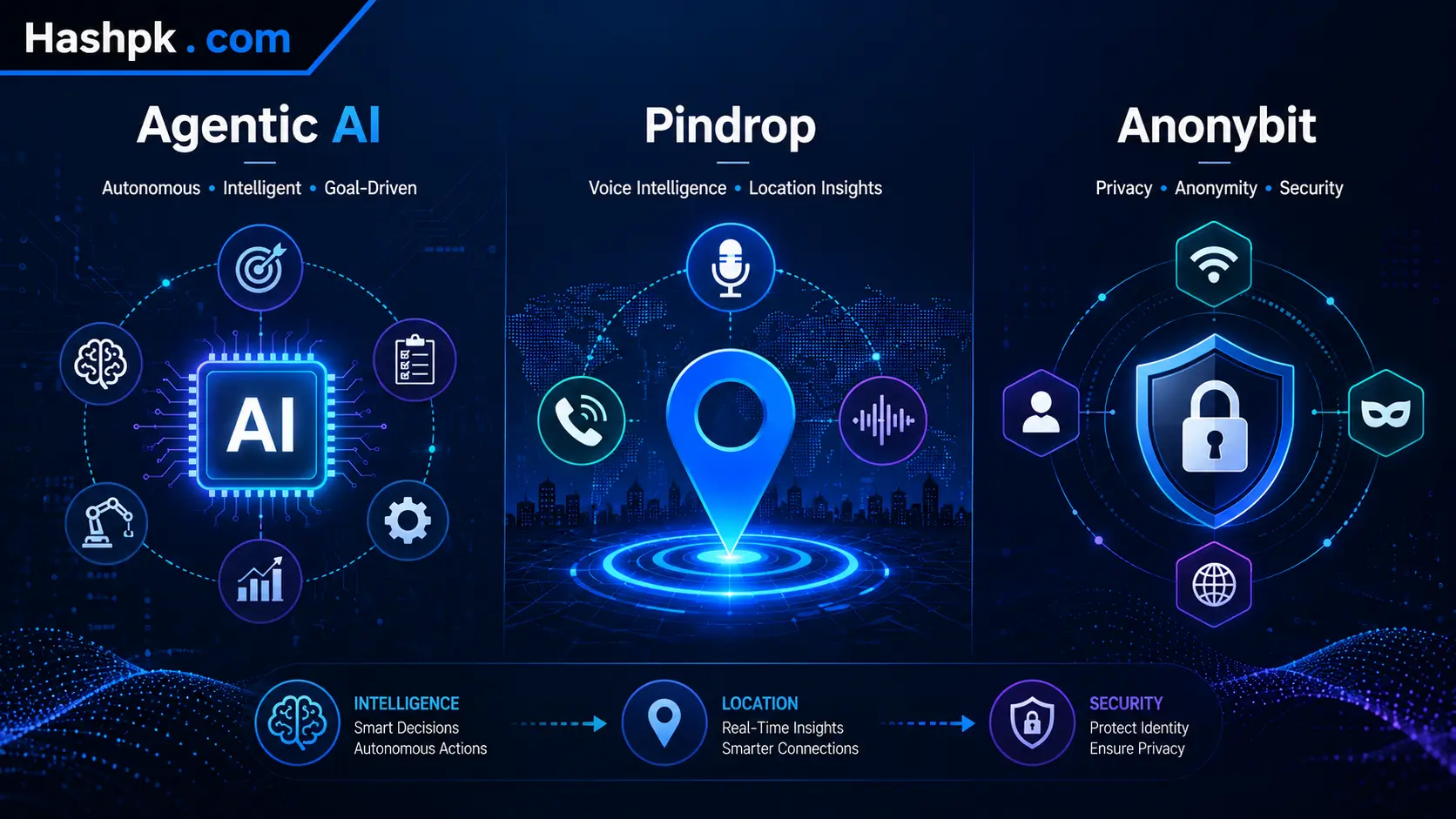
Agentic AI Pindrop Anonybit is the layered response to exactly that problem. Pindrop listens to the voice itself, Anonybit protects the identity data behind it, and an agentic AI layer makes the real-time call on what happens next — all in under 200 milliseconds. Here’s how each piece actually works, where the real numbers come from, and where the approach still has gaps worth knowing about.
Contact center fraud isn’t a fringe issue anymore either. Pindrop’s own 2025 Voice Intelligence & Security Report puts the rate at roughly 1 in every 599 contact center calls now involving some form of fraud — a scale that has pushed institutions past simple password resets and toward layered, real-time verification instead.
Why Voice Fraud Escalated This Fast
Human-run scams had a ceiling: one caller, one script, one attempt at a time. Agentic AI removed that ceiling entirely, letting automated systems initiate calls, answer challenge questions, and navigate IVR trees at machine speed and machine scale.
The industry numbers back this up hard. Deepfake fraud attempts in U.S. contact centers rose more than 1,300% in a single year, face-swap attacks on video calls climbed 704%, and mobile biometric injection attacks jumped 255% — three very different attack surfaces, all trending in the same direction at once.
What Pindrop Actually Does
Pindrop’s job is acoustic forensics — checking whether a voice carries the natural physical signals of a real human throat and vocal tract, or the subtle artifacts synthetic audio leaves behind. Its Pulse technology analyzes over 1,300 voice, device, and behavioral signals per call and returns a liveness score within seconds, with no extra step required from the caller.
Reported accuracy sits around 99.2% on synthetic and bot-generated speech alone, climbing to roughly 99.4% with under 1% false positives when Pulse runs alongside multifactor authentication. Pindrop has processed more than 5 billion calls to date and plugs directly into Webex, Genesys, Amazon Connect, and Five9.
What Anonybit Actually Does
Anonybit doesn’t analyze voice at all, it protects the biometric record sitting behind the verification. Rather than storing a fingerprint, face, or voiceprint in one central database, its Circle of Identity architecture fragments that data across multiple nodes, verifying identity without ever reassembling a complete record anywhere.
That structural choice matters because centralized biometric stores are a honeypot: one breach exposes every enrolled identity permanently, and unlike a password, you can’t issue yourself a new voice. The distributed design also lines up cleanly with data-minimization principles under GDPR, HIPAA, and CCPA, since no single location ever holds the full biometric picture.
How the Three Layers Work Together
A call doesn’t get an instant yes or no under this model, it moves through layers, each catching what the others might miss. Pindrop checks whether the voice is even human. Agentic AI evaluates whether the surrounding behavior fits a normal pattern. Anonybit confirms identity without exposing a reassembled biometric record in the process.
| Layer | Handles | Reported Accuracy / Speed |
| Pindrop | Acoustic liveness & deepfake detection | 99.2%–99.4% accuracy, <1% false positives |
| Anonybit | Decentralized biometric identity | Zero-knowledge-style verification, no central record |
| Agentic AI | Real-time accept/reject/challenge decisioning | Full cycle under 200ms |
The Accountability Question Most Guides Skip
Here’s the part rarely discussed: when an autonomous layer blocks a legitimate transaction, who’s actually responsible for that call? It’s not a small question once these systems start acting without a human reviewing every decision in real time.
Anonybit’s identity-bound agent model partially answers this by cryptographically tying every AI action to a verified human authorization — a chain of custody, essentially. Legal and compliance teams at regulated institutions still need to review that chain carefully before rollout, since the technology solving fraud doesn’t automatically solve liability.
Pulse for Meetings: Catching Video Deepfakes Live
Voice calls aren’t the only channel under attack, video meetings are too. Pindrop’s Pulse for Meetings went into beta in April 2025, built specifically to flag audio and video deepfakes in real time inside Zoom, Teams, and Webex, rather than reviewing a recording after the fact.
By October 2025, that detection had been folded directly into Webex Suite and Webex Contact Center, pairing meeting-level deepfake checks with passive voice biometrics on the contact-center side. The point of building it directly into existing collaboration tools was minimizing friction — security teams get an alert mid-meeting instead of a report the next morning.
The SmartUp Integration: Agentic Commerce in Practice
Anonybit’s identity work isn’t limited to fraud defense after the fact — it also extends into letting AI agents transact on a person’s behalf safely. In May 2025, the company launched what it called secure agentic workflows, described as the first working implementation pairing agentic commerce with decentralized biometrics.
A follow-up integration in July 2025 built an identity layer directly into SmartUp, a no-code platform, so an AI agent completing a purchase or account action can be cryptographically tied to the human who authorized it — without that person needing to re-verify manually at every single step.
What Happens the Moment a Call Gets Flagged
The sequence matters here. Acoustic liveness analysis starts within the first couple of seconds of a call connecting, checking resonance patterns and timing gaps that only synthetic speech produces — no action required from the caller, no added delay.
If the voice passes that check, Anonybit pulls biometric fragments from across its distributed nodes, runs a distributed match, and returns a score without ever assembling a complete voiceprint in one place. Only after both signals clear does the agentic AI layer issue its final accept, reject, or step-up challenge decision.
Where Adoption Actually Starts
Neither company publishes flat public pricing for this stack, since deployments get scoped around call volume and which platforms — Webex, Genesys, Amazon Connect — already sit in the environment. That’s standard for enterprise fraud infrastructure, but it does mean a real quote requires a direct conversation rather than a calculator.
Most rollouts of agentic AI Pindrop Anonybit start narrow, typically a single high-risk workflow like account changes or a single contact center, before expanding once accuracy and false-positive rates get validated against live traffic rather than lab conditions.
Where This Still Falls Short
Detection accuracy depends heavily on the dataset and specific attack type tested against it, which means numbers reported today may look different against next year’s cloning tools. Decentralized storage also isn’t an automatic compliance guarantee on its own — proper data classification and access control still matter separately.
- Cross-platform interoperability for identity-bound agents is still maturing
- Independent, real-world false-positive rates in messy production traffic are harder to verify than vendor-reported lab numbers
- Biometric data still can’t be “reset” the way a password can, even with fragmentation reducing exposure
Real Fraud Scenarios This Stack Catches
- Deepfake voice cloning — an AI-cloned voice impersonating a customer, caught by missing natural acoustic signals
- Biometric database breach — attackers target a central store; with Anonybit, no complete record exists to steal
- Face-swap attacks on video calls — real-time overlay tools, up 704% in a single year, flagged by Pindrop Pulse
- Mobile web injection — fake biometric data injected into an authentication pipeline, up 255%, blocked by distributed design
- AI agent impersonation — a malicious AI agent posing as a legitimate system, stopped by identity binding tied to a verified human
Agentic AI Pindrop Anonybit vs. General-Purpose AI Tools
General models like ChatGPT or Gemini are excellent at reasoning and generation, but they weren’t built to authenticate a caller or protect a biometric database. That gap is precisely the market this stack exists to fill.
| Factor | Pindrop + Anonybit + Agentic AI | General-Purpose AI |
| Real-time deepfake detection | Purpose-built, integrated into call infrastructure | No native capability |
| Biometric protection | Decentralized by design | Not applicable |
| Existing infrastructure fit | Webex, Genesys, Amazon Connect, Five9 | Requires custom integration |
Final Thoughts
Strip away the branding and agentic AI Pindrop Anonybit is really just three specialized jobs working together: one layer listens, one layer protects identity, one layer decides. None of the three covers the whole problem alone, which is exactly why fraud rings that scaled past human limits need a defense that doesn’t depend on a single point of failure either.
What makes 2026 the right moment to pay attention is the pace on both sides. Deepfake tooling keeps getting cheaper and more convincing, and a system reacting in under 200 milliseconds is a genuinely different proposition than a security question an AI can answer from a leaked database in half a second.
People Also Ask
What’s the best way to detect deepfake voices in a contact center?
Pindrop Pulse is the current leading approach, analyzing over 1,300 acoustic features per call. Paired with Anonybit’s identity binding and an agentic AI coordinator, it also catches autonomous AI-driven fraud agents, not just humans using a voice changer.
How does Anonybit protect biometric data differently from other systems?
It fragments biometric templates across distributed nodes rather than storing a complete record in one place, so a single breach can’t expose a full identity.
Is Anonybit’s approach actually GDPR compliant?
Its distributed structure supports GDPR’s data-minimization and privacy-by-design principles, along with HIPAA and CCPA alignment, since no complete template is ever stored or rebuilt in a single location.
Who’s responsible if an agentic AI system blocks a real customer?
Anonybit’s identity-bound agent model creates a cryptographic chain tying actions back to an authorized human, but liability review still falls to legal and compliance teams before deployment.
How is this different from regular voice biometrics?
Standard voice biometrics answers “is this the right person speaking?” Pindrop’s liveness layer asks a more fundamental question first — is anything actually speaking, or is this synthetic audio pretending to be a voice at all?


